Prevention from Suicide, Addiction, Narcotics and Pollution. Withdrawal and Recovery Facts of Narcotics | Symptoms of Suicidal thoughts & Ideations | Effects of Environment Pollution | Understand Addiction withdrawal
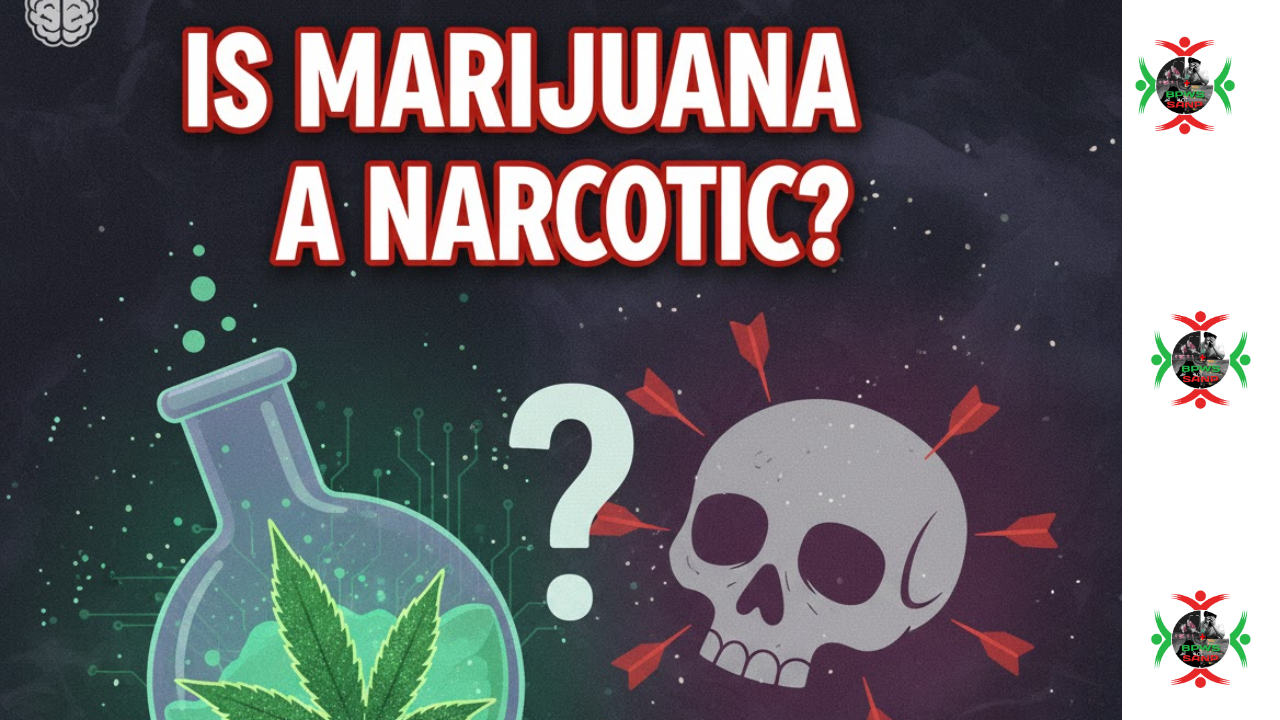
Is Marijuana a Narcotic? Exploring the Medical vs. Legal Debate
The term “narcotic” carries weight. It conjures images of illicit trade, serious addiction, and heavy-handed law enforcement. For decades, marijuana has been lumped into this category in the public consciousness, often mentioned in the same breath as heroin or cocaine during drug busts and policy debates.
However, as legalization sweeps across various states and medical research advances, the classification of cannabis is under the microscope. Ask a police officer if marijuana is a narcotic, and you might get a different answer than if you asked a pharmacist. One definition is rooted in outdated statutes and penal codes, while the other is grounded in chemistry and biology.
Understanding whether marijuana is a narcotic requires navigating a maze of conflicting terminologies. It is not just a matter of semantics; how we classify this plant impacts sentencing guidelines, medical research, and public perception. This guide examines the scientific and legal realities to answer the question: Is marijuana actually a narcotic?
Defining Narcotics: A Tale of Two Meanings
To understand where marijuana fits, we must first define what a narcotic is. The confusion largely stems from the fact that the word has two distinct meanings: one medical and one legal.
The Medical Definition
Medically speaking, the term “narcotic” is derived from the Greek word narkō, meaning “to make numb.” In a clinical setting, a narcotic refers specifically to opioids—substances that bind to opioid receptors in the brain to produce pain relief (analgesia) and sleep (narcosis).
Common medical narcotics include:
- Morphine
- Codeine
- Heroin
- Fentanyl
- Oxycodone
These drugs share a specific mechanism of action: they depress the central nervous system. This results in pain relief but also carries high risks of respiratory depression, extreme sedation, and physical addiction.
The Legal Definition
The legal system often plays by different rules. Historically, law enforcement agencies and legislators have used “narcotic” as a catch-all term for any illegal drug that is highly regulated.
In the mid-20th century, various laws categorized marijuana as a narcotic to justify harsh penalties for possession and distribution. While scientific understanding has evolved, the rigidity of legal language often lags behind. Consequently, you may still find marijuana grouped with opioids in certain state laws or international treaties, despite the biological differences.
Marijuana’s Chemical Composition and Effects
If we look strictly at science, marijuana differs significantly from true narcotics. The cannabis plant contains over 100 active compounds known as cannabinoids. The two most prominent are:
- Tetrahydrocannabinol (THC): The psychoactive compound responsible for the “high.”
- Cannabidiol (CBD): A non-psychoactive compound often used for therapeutic purposes, such as reducing anxiety or inflammation.
How It Affects the Body
Narcotics work by binding to opioid receptors. Marijuana, conversely, interacts with the endocannabinoid system. This vast network of receptors (CB1 and CB2) helps regulate mood, memory, appetite, and pain sensation.
When a person consumes cannabis, the effects can include euphoria, altered time perception, increased appetite, and relaxation. While it can produce sedation (similar to narcotics) in high doses or specific strains, it can also act as a stimulant or a hallucinogen depending on the user and the product. Crucially, cannabis does not depress the respiratory system in the way opioids do, which is why fatal overdoses from marijuana alone are virtually nonexistent.
Legal Classifications: The Schedule I Conundrum
The controversy over marijuana’s status is largely anchored in the Controlled Substances Act (CSA) of 1970. Under this federal U.S. statute, drugs are organized into five schedules based on their potential for abuse and medical value.
Marijuana is classified as a Schedule I controlled substance. This puts it in the same category as heroin and LSD. By definition, Schedule I drugs are considered to have:
- A high potential for abuse.
- No currently accepted medical use in treatment in the United States.
- A lack of accepted safety for use under medical supervision.
Is it legally a “Narcotic” under the CSA?
Here is where it gets technical. While marijuana is a Schedule I drug, the CSA actually distinguishes it from narcotics in certain sections. Section 802 of the CSA defines “narcotic drug” generally as derivatives of opium, poppy straw, coca leaves, and opiates.
Therefore, under strict federal definitions, marijuana is a controlled substance and a hallucinogen, but it is technically not defined as a narcotic in the definitions section of the federal code. However, because it shares the Schedule I status with heroin (a true narcotic), the distinction is often lost in political rhetoric and law enforcement practices.
Medical Use and Therapeutic Applications
The gap between the “narcotic” label and marijuana’s actual use is widest in the healthcare sector. True narcotics (opioids) are almost exclusively prescribed for severe acute pain, post-surgical recovery, or end-of-life care.
Medical marijuana, however, is prescribed for a broader and distinct set of conditions, including:
- Glaucoma
- Muscle spasticity (e.g., in Multiple Sclerosis)
- Nausea and vomiting induced by chemotherapy
- Epilepsy and seizure disorders
- Chronic pain management (often as an alternative to opioids)
The medical community increasingly views cannabis as a tool to combat the narcotic crisis. Because opioids are highly addictive and dangerous, doctors in legal states often recommend cannabis as a safer alternative for pain management. If cannabis were truly a narcotic, substituting it for opioids would merely be trading one addiction for an identical one. Instead, it offers a different pharmacological approach to symptom relief.
Arguments Against Narcotic Classification
Critics of the drug war and medical professionals alike argue that classifying marijuana as a narcotic—even colloquially—is harmful. There are several key arguments against this classification:
1. Distinct Pharmacological Profile
As noted, marijuana does not target opioid receptors. Classifying it as a narcotic ignores basic pharmacology. It functions closer to a hallucinogen or a depressant with stimulant properties, defying simple categorization.
2. Safety and Toxicity
Narcotics have a narrow therapeutic window; the difference between a dose that kills pain and a dose that kills the patient can be small. Marijuana has an incredibly high safety profile regarding toxicity. Grouping them together suggests they carry equal immediate risks to life, which is factually incorrect.
3. Barriers to Research
When laws treat marijuana with the severity reserved for heroin, it creates immense hurdles for researchers. Scientists face strict regulations and funding limitations when studying Schedule I substances. Removing the “narcotic” stigma and rescheduling the drug could unlock significant medical advancements.
4. Social Stigma
The word “narcotic” carries a heavy social stigma associated with “hard drugs.” Applying this label to cannabis users—many of whom are patients—criminalizes their behavior in the court of public opinion, even if they are acting within state laws.
Moving Beyond the Label
So, is marijuana a narcotic?
From a medical and scientific standpoint, the answer is a definitive no. It does not belong to the opioid class of drugs, it does not carry the same risk of fatal overdose, and it interacts with the body through a completely different biological system.
From a legal standpoint, the answer is “it’s complicated.” While strict federal definitions separate marijuana from narcotic drugs, its placement in Schedule I alongside heroin has inextricably linked the two in the eyes of the law.
As society moves toward decriminalization and legalization, precision in language becomes vital. distinguishing cannabis from narcotics isn’t just about being a stickler for grammar; it is about creating drug policies that are based on science rather than fear.