Prevention from Suicide, Addiction, Narcotics and Pollution. Withdrawal and Recovery Facts of Narcotics | Symptoms of Suicidal thoughts & Ideations | Effects of Environment Pollution | Understand Addiction withdrawal
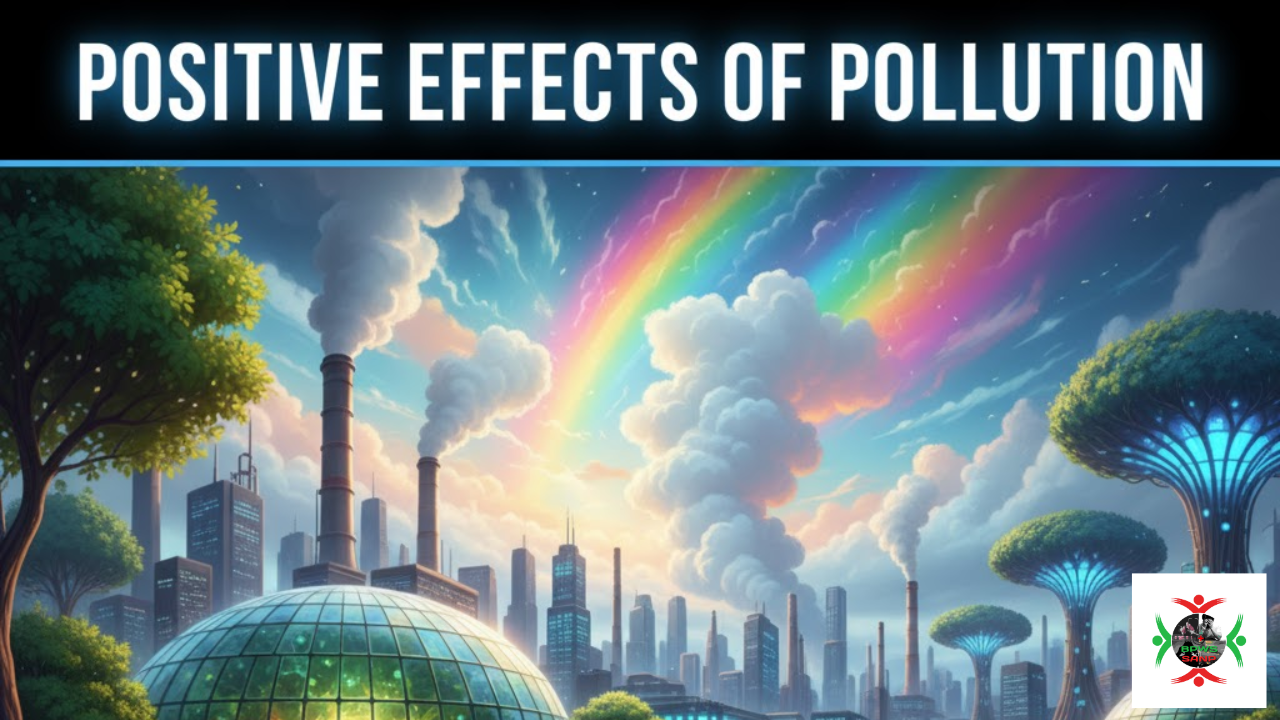 Unexpected Outcomes: How Pollution Sparked Innovation and Reform
When we think of pollution, the images that come to mind are usually stark: smog-choked skylines, plastic-filled oceans, and contaminated waterways. These are rightfully viewed as failures of stewardship and threats to public health. However, viewing pollution solely through a lens of destruction misses a complex and historically significant side of the story.
The presence of pollution has, paradoxically, acted as a powerful catalyst for human progress. It has forced civilizations to adapt, innovate, and regulate in ways that might never have happened otherwise. From the birth of modern environmental laws to the rapid advancement of automotive technology, the need to clean up our mess has driven significant societal evolution.
This article explores the counter-intuitive “positive” effects of pollution—not to justify environmental damage, but to understand how humanity’s response to crisis drives economic shifts, technological breakthroughs, and a deeper understanding of our planet.
The Economic Paradox of Industrial Growth
The relationship between pollution and economics is complicated. In the short term, industries that pollute often drive significant economic growth. This is the classic tension between industrialization and conservation. Factories, power plants, and mining operations create jobs, build infrastructure, and produce the goods that modern society relies on.
Understanding Externalities
To understand this dynamic, economists look at “externalities.” In a market economy, companies balance their own costs and benefits. However, pollution is often a negative externality—a cost associated with production that the company doesn’t pay for directly. Instead, society bears the cost through healthcare issues or environmental degradation.
While this is detrimental to public well-being, the activities causing the pollution often boost the Gross Domestic Product (GDP). GDP measures the total market value of goods and services produced. Interestingly, even the cleanup of pollution contributes to GDP. Money spent on medical treatment for pollution-related illnesses, hazardous waste remediation, and environmental consulting creates a secondary economy. While this isn’t the ideal way to generate wealth, it demonstrates how pollution necessitates economic activity across multiple sectors.
Innovation Through Necessity
Perhaps the most tangible benefit arising from the fight against pollution is technological advancement. History shows that when industries are backed into a corner by environmental necessity, they innovate. This phenomenon is known as “technology-forcing regulation.”
The Automotive Revolution
A prime example occurred in the United States auto industry. In the 1970s, the Clean Air Act introduced strict emissions standards that many manufacturers claimed were impossible to meet. They were forced to develop new devices to control exhaust.
This pressure led to the widespread adoption of the three-way catalytic converter by 1981. But the innovation didn’t stop at the exhaust pipe. To make catalytic converters work effectively, engines needed precise control over fuel injection and combustion temperatures. This requirement forced engineers to integrate sensors and electronic controls into vehicles.
As a result, the effort to reduce smog inadvertently pushed the automobile into the computer age. What began as a begrudging attempt to meet environmental standards fundamentally re-engineered the car into a “computer on wheels,” improving reliability and efficiency alongside air quality.
Turning Waste into Resources
Pollution control has also shifted how we view waste. What was once discarded as sludge or trash is increasingly recognized as a reservoir of valuable raw materials. This shift is driving the “circular economy,” where resources are recovered and recycled rather than dumped.
The Case of Struvite
Wastewater treatment plants have historically struggled with a mineral called struvite. It forms naturally in sewage sludge, clogging pipes and damaging equipment like concrete in arteries. For decades, it was simply a nuisance that increased maintenance costs.
However, researchers realized that struvite is rich in phosphorus and nitrogen—key ingredients in fertilizer. Innovation in chemical engineering allowed plants to intentionally precipitate struvite crystals from wastewater side streams. Today, companies harvest this mineral to produce slow-release, commercial-grade fertilizers.
This process solves two problems at once: it keeps treatment plants running smoothly and recovers phosphorus, a finite resource essential for global agriculture. It transforms a pollution management headache into a revenue stream.
The Wake-Up Call: Rising Environmental Awareness
Pollution is rarely subtle. When it impacts daily life, it becomes a powerful mobilizing force for public awareness and political activism. High-profile pollution incidents often serve as tipping points that shift public opinion and demand accountability.
The Burning River
One of the most famous examples in American history is the Cuyahoga River fire of 1969. Located in Cleveland, Ohio, the river was so heavily polluted with industrial waste and oil that it famously caught fire. While the river had actually burned multiple times over the previous century, the 1969 fire captured the attention of national media, including Time magazine.
The image of a burning river shattered the public’s complacency regarding industrial dumping. It became a potent symbol of environmental neglect. The outrage following the fire helped galvanize the environmental movement, contributing directly to the first Earth Day in 1970 and the establishment of the Environmental Protection Agency (EPA).
Setting the Standard: Regulations and Stability
The presence of pollution necessitates rules. While some argue that regulation stifles business, evidence suggests that clear environmental standards actually provide stability and certainty for industries.
According to analysis by Ceres, a sustainability nonprofit, the EPA has a strong track record of accurately forecasting technological progress. When the government sets a clear target for pollution reduction, it creates a “level playing field.” Companies know what is expected of them and can invest in long-term research and development without fear that competitors will undercut them by polluting freely.
This regulatory certainty spurs investment in cleaner technologies. Whether it is power plant pollution control or fuel efficiency standards, regulations create a market demand for solutions, driving the private sector to solve public problems.
Moving Toward a Cleaner Future
The positive effects of pollution are not inherent in the pollution itself, but in humanity’s refusal to accept it as the status quo. The smog, the waste, and the contamination have served as harsh teachers, pushing us toward:
- Technological leaps like the computerization of cars.
- Resource efficiency through wastewater recovery.
- Political action that created the legal frameworks protecting our health today.
Recognizing these advancements doesn’t mean we should welcome pollution. Instead, it highlights our capacity for resilience and innovation. The ultimate goal remains to eliminate pollution at the source, but the journey to get there continues to yield unexpected benefits for our economy and our technology.