Prevention from Suicide, Addiction, Narcotics and Pollution. Withdrawal and Recovery Facts of Narcotics | Symptoms of Suicidal thoughts & Ideations | Effects of Environment Pollution | Understand Addiction withdrawal
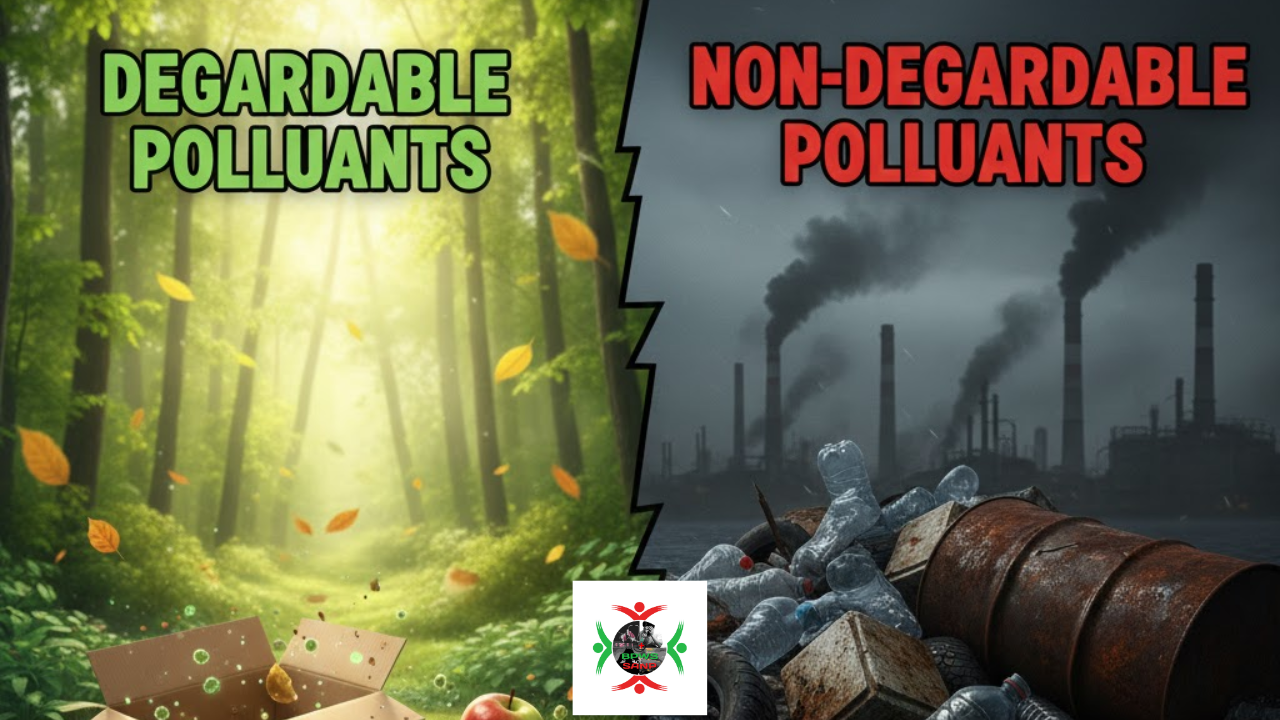 Degradable vs Non-Degradable Pollutants: What You Need to Know
Pollution is one of the most critical environmental challenges of our time. From the smog hovering over major cities to the plastic islands floating in our oceans, the evidence of human impact is everywhere. However, not all pollution behaves the same way. To effectively tackle this crisis, we first need to understand the fundamental differences between the types of waste we produce.
The key distinction lies in how materials persist in nature. Pollutants are generally categorized into two main groups: degradable and non-degradable. Understanding the lifecycle of these materials—from production to disposal—is essential for making informed decisions about waste management and environmental protection.
In this guide, we will break down the characteristics of these pollutants, explore their impacts on our ecosystems, and discuss the strategies needed to manage them responsibly.
Understanding Degradable Pollutants
Degradable pollutants are materials that can be broken down into simpler, harmless substances over time. This decomposition process occurs naturally, driven by biological agents such as bacteria, fungi, and other microorganisms. Because nature has a built-in mechanism to handle this waste, these pollutants generally pose a lower long-term threat to the environment—provided they are managed correctly.
Types and Examples
Most degradable pollutants are organic in nature. Common examples include:
- Domestic Sewage: Wastewater from households containing organic matter.
- Agricultural Waste: Crop residues, animal manure, and discarded produce.
- Paper and Wood: Cardboard boxes, newspapers, and timber scraps.
- Food Scraps: Vegetable peels, leftover meals, and compostable organic matter.
How Decomposition Works
The breakdown of these materials is primarily a biological process known as biodegradation. Microorganisms consume the organic matter as a food source, converting complex compounds into simple elements like carbon dioxide, water, and methane. Environmental factors such as temperature, moisture, and oxygen levels play a significant role in how fast this process happens. For instance, a banana peel might decompose in a few weeks in a hot, humid compost bin, but could take months in a cold, dry environment.
The Hidden Risks
While “degradable” sounds harmless, it is not without risks. The problem arises when the volume of waste exceeds nature’s capacity to break it down. If too much degradable waste is dumped into a water body, the decomposing bacteria multiply rapidly. These bacteria consume the dissolved oxygen in the water, leading to a hypoxic environment where fish and other aquatic life cannot survive. This phenomenon, often seen in algal blooms caused by agricultural runoff, proves that even natural waste requires careful management.
The Persistent Threat of Non-Degradable Pollutants
Non-degradable pollutants are the other side of the coin. These are materials that cannot be broken down by natural biological processes. Once introduced into the environment, they persist for decades, centuries, or even millennia. Because nature has no way to digest them, they accumulate over time, creating a compounding problem for future generations.
Types and Examples
These pollutants are often synthetic or inorganic. Common examples include:
- Plastics: Bottles, bags, synthetic fibers, and microplastics.
- Heavy Metals: Lead, mercury, arsenic, and cadmium released from industrial processes.
- Glass: Bottles and jars (while inert, they do not biodegrade).
- Synthetic Chemicals: Certain pesticides like DDT (Dichlorodiphenyltrichloroethane) and industrial chemicals like PCBs (Polychlorinated Biphenyls).
Persistence in the Environment
The defining characteristic of non-degradable pollutants is their longevity. A plastic bottle, for example, may photodegrade (break into smaller pieces due to sunlight) but never truly disappears. It simply turns into microplastics that permeate soil and water.
Bioaccumulation and Biomagnification
One of the most dangerous aspects of non-degradable pollutants is their ability to enter the food chain.
- Bioaccumulation: This occurs when an organism absorbs a toxic substance at a rate faster than it can be lost. For example, a small fish might absorb mercury from polluted water.
- Biomagnification: This is the increase in concentration of the pollutant as it moves up the food chain. A larger fish eats thousands of the small mercury-tainted fish, accumulating a high dose of the metal. By the time a human consumes the large fish, the toxin levels can be dangerous.
Key Differences: Degradable vs. Non-Degradable
To visualize the distinction, it helps to compare these two categories side-by-side.
Breakdown Process
Degradable pollutants are decomposed by microbial action. Nature recycles them. Non-degradable pollutants resist microbial attack and remain in the environment indefinitely unless physically removed or chemically treated.
Timeframe
The lifespan of degradable waste is measured in weeks or months. Non-degradable waste is measured in years or centuries. A paper bag might last a month; a plastic bag could last 400 years.
Management Complexity
Managing degradable waste is often simpler and cheaper. Composting and sewage treatment are established, biological processes. Managing non-degradable waste is complex, expensive, and energy-intensive, requiring recycling facilities, secure landfills, or specialized chemical treatments.
Strategies for Management and Solutions
Addressing the pollution crisis requires a multi-faceted approach. We cannot simply rely on nature to clean up our mess, especially when dealing with synthetic materials.
Recycling and Circular Economy
For non-degradable pollutants like plastics and metals, recycling is crucial. Instead of a “take-make-dispose” model, a circular economy aims to keep materials in use for as long as possible. This reduces the need for new raw materials and prevents waste from entering ecosystems.
Advanced Waste Treatment
Technology plays a vital role in managing waste that cannot be recycled.
- Incineration with Energy Recovery: Burning waste to generate electricity, though this must be carefully managed to prevent air pollution.
- Bioremediation: Using specific bacteria or plants to clean up contaminated soil or water. For example, certain plants can absorb heavy metals from the ground, a process known as phytoremediation.
Policy and Regulation
Government intervention is necessary to curb the production of harmful pollutants. Bans on single-use plastics, strict regulations on industrial discharge, and incentives for sustainable packaging are powerful tools. International agreements are also vital for managing pollutants that cross borders, such as marine debris and greenhouse gases.
Individual Responsibility
On a personal level, reducing consumption is the most effective strategy. Choosing reusable items over disposable ones, composting organic waste, and properly disposing of hazardous materials (like batteries and electronics) can significantly reduce an individual’s environmental footprint.
Building a Cleaner Future
The distinction between degradable and non-degradable pollutants is more than just scientific terminology; it dictates how we must interact with the products we use every day. While degradable waste presents challenges regarding volume and oxygen depletion, non-degradable waste presents a lasting, cumulative threat to the health of our planet.
Sustainable waste management is not a luxury—it is a necessity. By supporting policies that limit persistent pollutants, embracing recycling, and being mindful of our own consumption habits, we can mitigate the damage. The goal is not just to manage waste better, but to create a world where harmful, persistent pollutants are the exception, not the rule.